
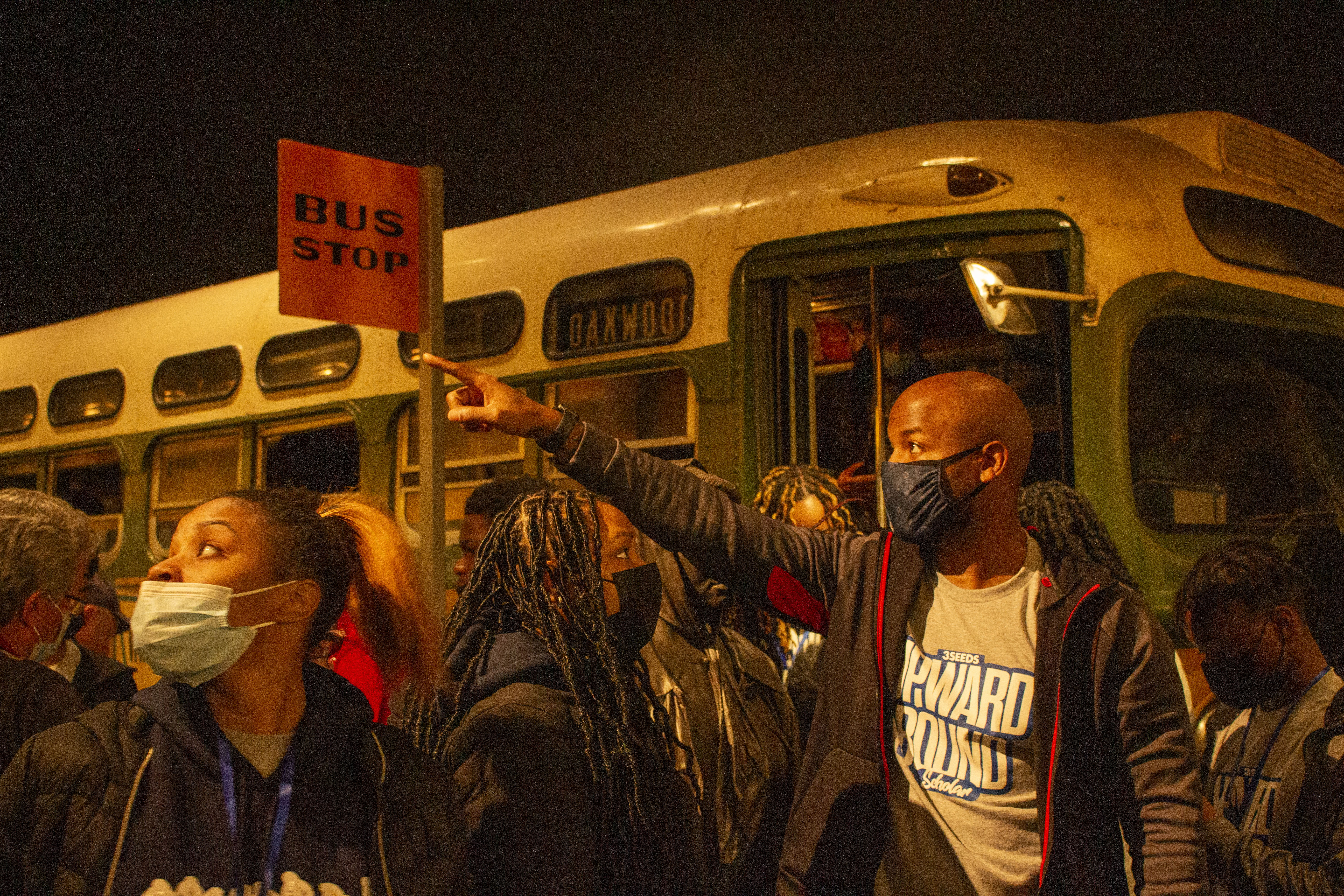
Memphis, Tenn.- The National Civil Rights Museum at the Lorraine Motel in Memphis, Tenn. is visited by thousands of people every year, including parents who believe that it is important to bring their young children to the museum and educate them on the history of race.
Many tourists brought children of various ages, almost all of whom were younger than a teenager. How and why these parents are taking extra steps to educate their children about racial issues provides answers to the question that the National Civil Rights Museum is constantly asking about the future of racial issues: “Where do we go from here?”
Karin Hudson, who is a black mother of a 12 year old girl and two younger children, felt that the museum was important for her children’s education. She said “we thought it would be good to be able to come out and show her some history, since she is getting up in age and really starting to understand where she comes from and some of the struggles that black people have experienced. “
Hudson believes that teaching her children, specifically her oldest daughter, will provide them with necessary life lessons. “It’s also good from almost-teenage perspective so that she can kind of see some of the struggles that she goes through just because of being black. And that it was people before her that went through a whole lot more, and fought for the rights she has,” said Hudson of her oldest daughter.
With her younger children, who are three and five, Hudson said it was more difficult to explain the content of the museum. “It was challenging w the little ones, just like, helping them to kind of understand. I think it was good with the visuals, like we were able to get on the bus and the little ones asking about Rosa Parks and why she had to go to the back of the bus,” Hudson said.
Hudson said that the education was difficult for a multitude of reasons. While it was challenging to help her adolescents conceptualize how the feelings towards race have evolved, she stated that it was also an emotionally difficult lesson.
“The part about being less human, and so that- that hits you when it’s just about the color of your skin that you’re inferior, even though you have the qualities that you need to be a successful person,” said Hudson. “Yeah that hits you in the heart bc as an African American all I want is for my kids to have good schools to go to, for my home to have a good value, to be successful- You know, to live what they call the American dream.”
Yolanda Greene, mother of three children ages four, six and eight, traveled from Nashville, Tenn. with her children to take them to The National Civil Rights Museum.
“History is just important regardless,” said Greene about the history of race issues in the United States. “I thought it was important for them to be able to understand it.”
Greene spoke about how her children reacted to the intensity of the museum, and how she overcame that obstacle. Greene said “my eight year-old at some points, when it got really intense- the prisoner section, the freedom fighter section with the bus an all that, the bridge over selma- she got a little scared…”
However, Greene, who is a black woman, helped ease her child’s nerves and said “I started telling her the story and why it’s important, and why people made sacrifices for us to live a better life.”
Diondra Jones, a mother of three, also experienced some challenges when explaining the severity of the museum’s content. Jones said “it was kind of difficult because the oldest is only six so she doesn’t really comprehend slavery and laws against- being separate. Because that’s not something she’s experienced, at least not right now, in her life.”
Jones also took extra care to insure that her children did not just see the contents of the museum, but understood them as well. “I just had to take her step-by-step, ‘do you what understand this means?,’ she’s like ‘yes,’ and I say ‘can you repeat what I said?’ It’s just step-by-step, explaining it to them like it’s ‘1+1=2’. That’s all we had to do,” said Jones.
Some children also found the experience educational and beneficial. Angela Hanson, a mother of two, asked her son “will you remember this do you think? Like when we go home and when you get older do you think you’ll remember us coming here?” Hanson’s son, Emmett, responded, “yeah, probably. Hopefully!”
Issues of educating young children about racial issues in America have become more prevalent in the last few years, however some parents believe that it will empower and educate their children.
“You can’t go forward if you don’t know your past,” said Jones.
 Sophia's articles
Leave a comment